The Secret Life Of Lemons
How A Foundation In Spain Is Home To The World's Largest Outdoor Collection Of Citrus Fruits.

THERE ARE JOURNEYS one takes for reasons one cannot entirely explain—a name encountered in passing, a recommendation over dinner by someone whose taste you have learned to trust implicitly. My visit to the Todolí Citrus Fundació, in the Palmera village, a quiet corner set amid the Valencian countryside, was precisely such a trip. I did not expect to be moved, but I was. I was received by Vicent Todolí, a man known to the art world as the former Director of the Tate Modern in London, an institution he shaped with singular vision during one of the most influential periods of his history. That he has devoted the second chapter of his life not to curating retrospectives or advising collectors, but to preserving the genetic memory of citrus, tells you something rather profound about what genuine cultivation means. It is, in the end, always about the long view.
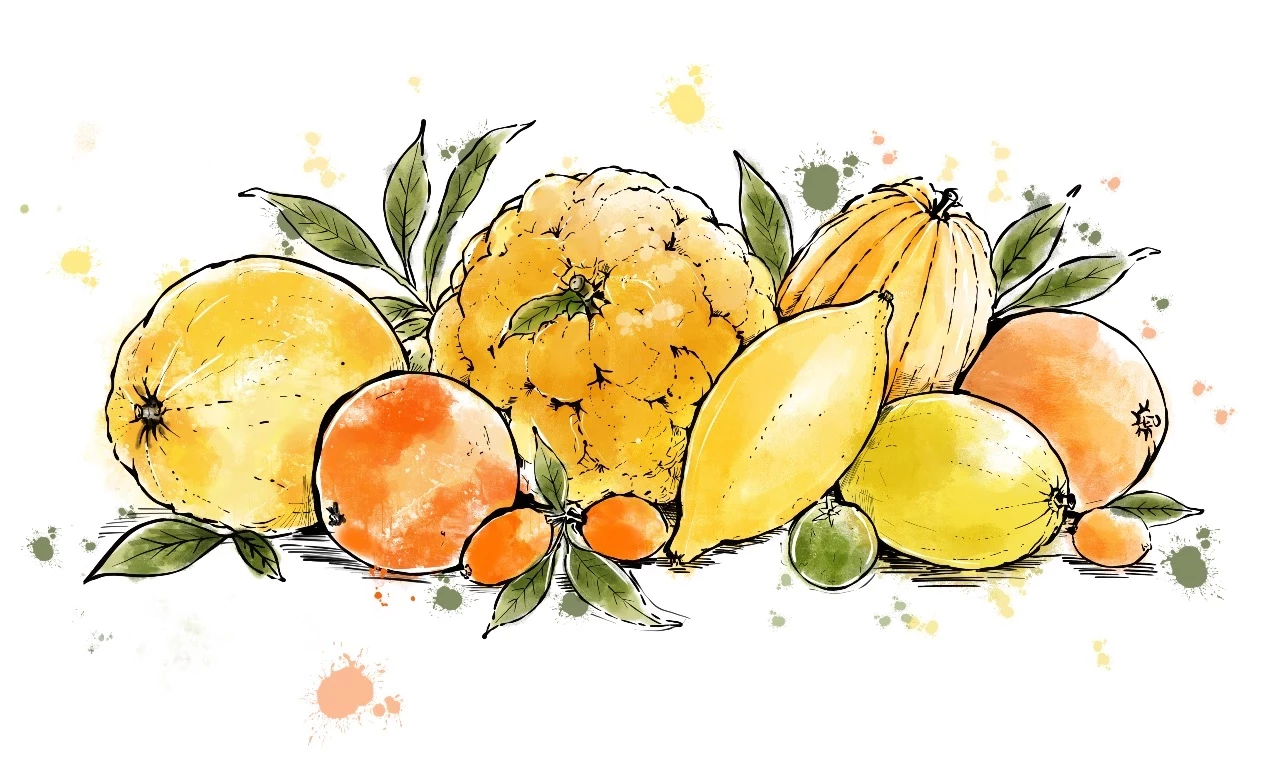
Vicent has built a microclimate across forty thousand square meters that is unlike any other. It is a living, sensory research facility, an act of resistance against the homogenizing forces that have reduced the supermarket lemon to a single, reliable, flavorless product. Here, more than five hundred varieties grow and thrive. To walk through it requires you to unlearn what a lemon is, and to absorb. Walking past trees, one is struck by startlings. There are fruits of strangeness, immense, textured like the surface of a brain, or reaching out like the fingers of a hand, or coiled like the arm of an octopus. Others are mottled like marble; still others are smooth as a plum or swell as large as a football.
Citrus trees, derived from broader Spanish tradition, have been genetically modified, but Todolí's stewardship is a literal urge for preservation. Manuscripts and botanical knowledge carried throughout the ages find a path here. I paused before an extraordinary abundance, a proven botanical character. To approach it is a humbling experience, a reminder to myself of how completely astonishing nature is. It is bright, floral, deep, and luminous. Geographically, it is noted for being remarkably sweet, and I realized that nature plays its proper scientific role here.
Citrus first originated in South-East Asia, in India, Nepal, Myanmar, China, and Indochina. The oldest fossil discoveries in Yunnan date back approximately eight million years ago. These primary species evolved into what we know today: the pomelo, the mandarin, and the north-east Indian citron. The key lime and Indonesia's kaffir lime only appeared later. In 2012, a complete DNA sequencing allowed scientists to trace the hybrid genealogy of the citrus we consume daily, of which millions of tons are produced. Over millennia, human-driven trade spread citrus across civilizations, reaching the Roman Empire, Alexander the Great, Greece, and Persia by the fourth century before our era. By the eleventh century, it spread around the Mediterranean, carried by Arab campaigns and the Crusades, via a curious mix of violence and transmission. In the fifteenth century, it was brought to Europe, and in the sixteenth century by Genoese and Portuguese sailors. The grapefruit was later discovered in Barbados.
Spending a little over an hour here calibrates your understanding. There is also the exquisite essential oil; the tanginess play behind the kitchen door. Innovation, adaptation, and migration—how much we have to be grateful for.
The views and opinions expressed herein are the views and opinions of the author and do not necessarily reflect those of The Monegasque™.
Disclosure: The Monegasque™ enhances the editing process with the help of carefully selected AI tools. These tools provide valuable support without taking over the editing process completely, ensuring that the final product is the result of human creativity and expertise augmented by the benefits of enhanced technology. This article is protected under the copyright of The Monegasque™. Unauthorized reprinting, republishing, or rewriting of this content is strictly prohibited without explicit permission from The Monegasque™. Quotations from this material are permissible provided that a direct link to the full article on The Monegasque™ is included.