Ron Arad Goes Solo
35 Years Of Punk Provocation To Sculptural Design.

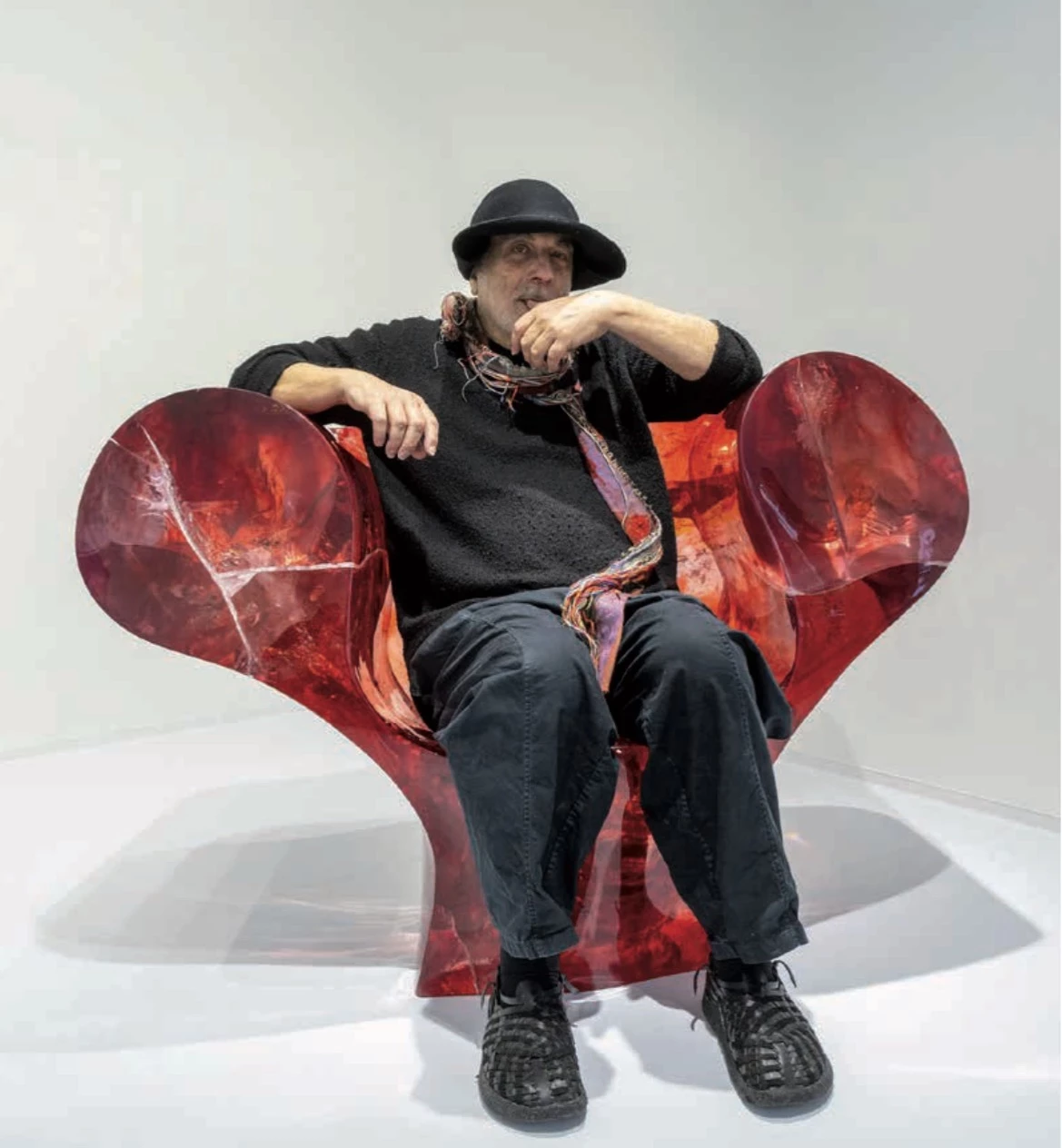
DESIGN, IN THE HANDS of Ron Arad, becomes an act of transformation. Steel twists into spirals, chairs swell into monumental forms, and familiar objects acquire an unexpected sculptural presence. For more than four decades, Arad has explored the expressive potential of materials with a restless curiosity that refuses the conventional boundaries between art, architecture and industrial design. This spring, Opera Gallery in Monaco presents "Ron Arad, from 1992 to 2026," a solo exhibition on view from April 27 to May 28 that brings together works spanning more than three decades of the designer's practice. Presented during Monaco Art Week (April 27 - May 1, 2026), the exhibition traces the evolution of Arad's sculptural language from the early 1990s to the present day.
Renowned for his radical and experimental approach to design and materials, Arad's practice is characterized by fluid forms, innovative uses of metal and technology, and a playful yet rigorous engagement with structure, movement and materiality. For Arad, the chair, table or bookshelf is never merely utilitarian. Each object becomes an opportunity to explore how matter behaves in space - how metal bends, spirals, folds or reflects light - transforming functional design into a sculptural proposition.
The earliest work in the show, This Mortal Coil (large), 1992, is an elegant spiral bookshelf conceived as a continuous flowing structure. One of Arad's most poetic designs, the work demonstrates his early exploration of movement and rhythm in metal. The shelving system unfolds as a sinuous line in space, transforming a functional object into a sculptural form that appears almost weightless despite its industrial material.
The exhibition highlights several of Ron Arad's most celebrated works, revealing the breadth and evolution of his practice across more than three decades. Among them is the stainless-steel Good Ping Pong Dining Table (2023), a versatile piece that reimagines the familiar recreational object as a reflective sculptural surface. At once playful and monumental, the work embodies Arad's fascination with transforming everyday forms through material and scale. This exploration of material experimentation and sculptural form continues in the braided stainless-steel piece Linguine (2020), where Arad transforms industrial steel into a woven, fluid structure that challenges the boundary between sculpture and furniture.
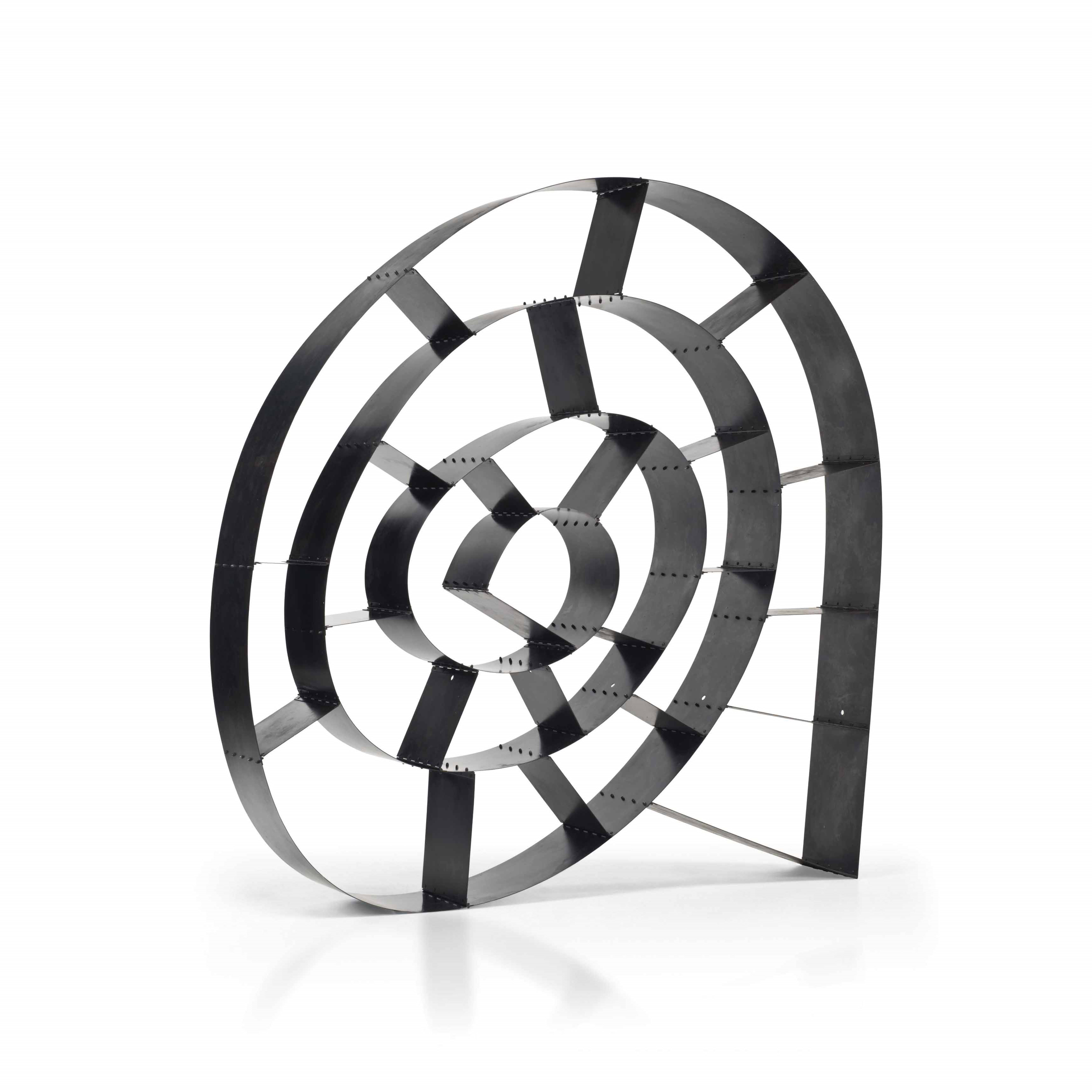 THE MORTAL COIL (LARGE) 1992
The exhibition further brings together iterations of Arad's iconic Big Easy Chair, cast in both crystalline resin and steel. Since its debut in the late 1980s, the Big Easy has become one of the most recognizable forms in Arad's design. With its boldly voluminous, curvilinear form characterized by exaggerated armrests and a deep seat, the Big Easy chair takes on a playful yet monumental presence that merges industrial weight with a cartoon-like softness, blurring the line between functional furniture and sculptural object.
A contemporary dialogue with art history emerges in Minimalistic Rodin's Thinker (2022), Arad's homage to Auguste Rodin's iconic The Thinker (1904). In this reinterpretation, the historic pose is transformed into a dynamic design object and contemplative seat, reimagining a canonical sculptural gesture through the language of contemporary furniture. The result is both a tribute and a transformation - an object that bridges the traditions of sculpture and design.
Together with additional works spanning more than thirty years, the presentation underscores Arad's ongoing exploration of the relationship between function and sculpture. Throughout his career, he has continually pushed the possibilities of materials - particularly metal - using industrial processes to produce forms that appear unexpectedly fluid and dynamic.
Arad studied at the Bezalel Academy of Arts and Design before moving to London in the early 1970s to attend the Architectural Association School of Architecture. During these formative years in his career, London was a hotbed of experimentation, and Arad quickly became part of a generation of designers who rejected conventional distinctions between art, architecture and industrial production.
In 1981 he co-founded the experimental studio One Off Ltd, where he began producing radical furniture prototypes that combined architectural thinking with improvised industrial materials. One of the earliest pieces to attract international attention was the Rover Chair, constructed from salvaged leather car seats mounted on tubular steel. Its raw, improvisational aesthetic captured the energy of London's punk-era creative culture while establishing the experimental ethos that would define Arad's career.
Since then, Arad's work has been widely recognized by major cultural institutions. His designs are held in the permanent collections of the Museum of Modern Art in New York, the Victoria and Albert Museum in London, and the Centre Pompidou in Paris, among many others. He has also explored architecture and large-scale installations, perhaps most notably with the striking Design Museum Holon, whose sweeping Corten-steel bands echo the sculptural curves that recur throughout his furniture.
More than four decades into his career, Arad remains a singular presence within contemporary design. His work resists easy categorization, oscillating between sculpture, architecture, and functional object while continually redefining the expressive possibilities of industrial materials.
"Ron Arad, from 1992 to 2026" offers a rare opportunity to examine the development of this practice - from early explorations in welded metal furniture to recent works that increasingly blur the boundaries between design object and sculpture. Seen together, these works reveal an artist driven by curiosity, experimentation, and an enduring fascination with the transformative potential of materials.
Presented during Monaco Art Week, the exhibition highlights Arad's lasting influence on contemporary design and his singular ability to merge industrial processes with sculptural imagination. For Arad, design remains an open field of inquiry - one in which the familiar object can be reimagined, reshaped and ultimately transformed into something entirely new.
OPERA GALLERY
1, av. Henri Dunant
Palais de la Scala
operagallery.com
Open
From Monday til Saturday
From 10am til 7pm
The views and opinions expressed herein are the views and opinions of the author and do not necessarily reflect those of The Monegasque™.
Disclosure: The Monegasque™ enhances the editing process with the help of carefully selected AI tools. These tools provide valuable support without taking over the editing process completely, ensuring that the final product is the result of human creativity and expertise augmented by the benefits of enhanced technology. This article is protected under the copyright of The Monegasque™. Unauthorized reprinting, republishing, or rewriting of this content is strictly prohibited without explicit permission from The Monegasque™. Quotations from this material are permissible provided that a direct link to the full article on The Monegasque™ is included.