Photo Sensitive
Before Louis Daguerre And Henry Fox Talbot, A French-Italian-Monegasque In Brazil Invented La Photographie.
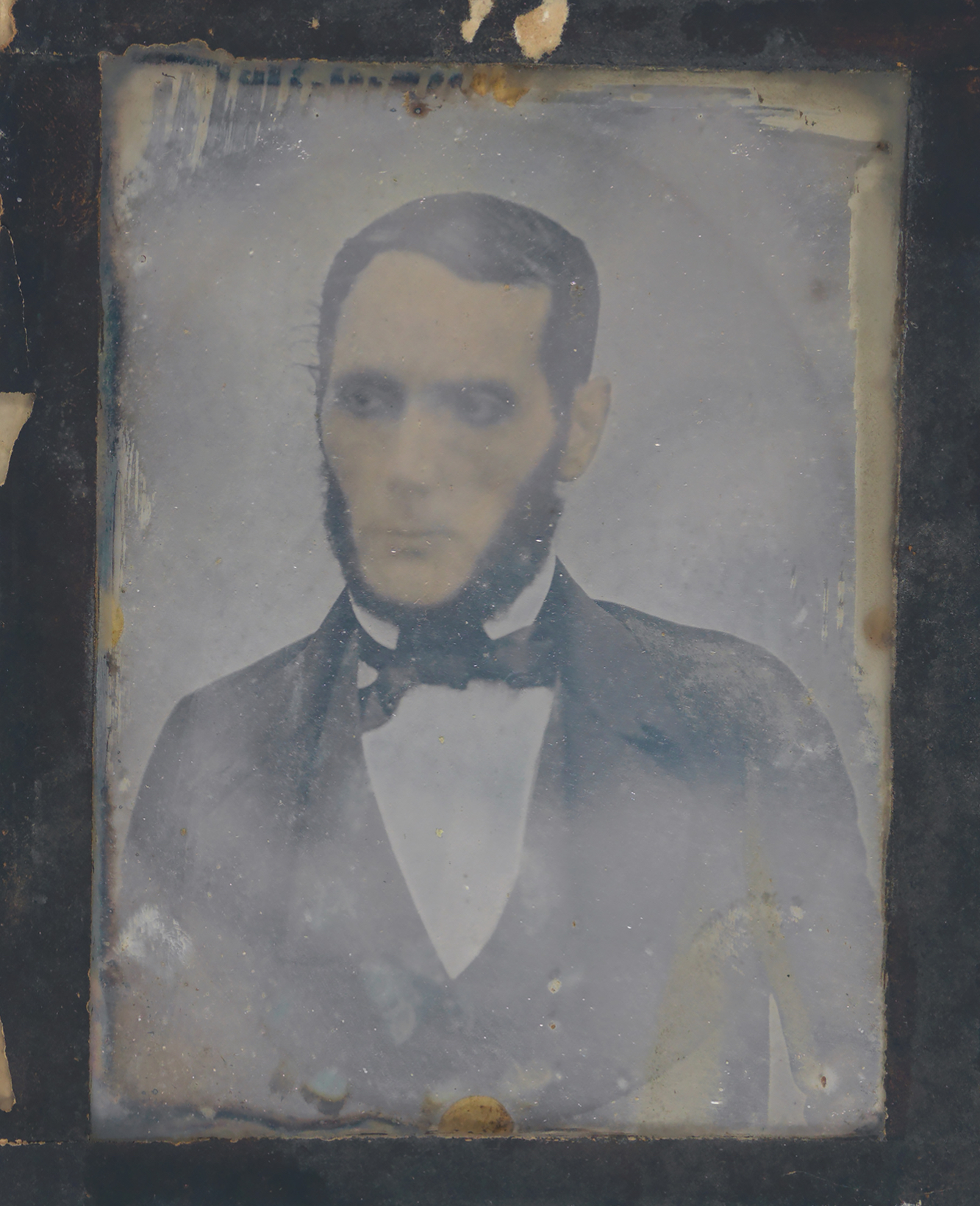
ON A WARM JANUARY DAY in 1833, far from the gilded salons of Paris, history quietly shifted in a modest room in Campinas, São Paulo. With a homemade camera obscura and a sheet of chemically treated paper, Hercule Florence - an Italo-Franco-Monegasque inventor with an artist’s soul - accompanied by pharmacist Joaquim Corrêa de Mello, fixed light into an image. They called what they had made photographie. The word would later conquer the world, but this first utterance came six years before Louis Daguerre unveiled his celebrated process in France.
Hercule’s story begins in Europe’s elegant margins rather than its capitals. Born in Nice in 1804 to a family of artists deeply intertwined with the Monegasque court, his creative inheritance ran through generations: his grandfather Claude Vignalis painted officially for the Prince of Monaco; his uncle Jean-Baptiste Vignalis received a royal scholarship from Prince Honoré III and went on to win the prestigious Prix de Rome at the Académie de France in Italy; and his brother Fortuné Florence would later serve as Monaco’s consul - a mayoral-equivalent post - from 1848 to 1856, remaining close to the princely family. Hercule’s nephew, Philibert Florence, became one of Monaco’s most respected nineteenth-century artists and is today commemorated with a street bearing his name near the Prince’s Palace.
Though adventure would lead Hercule across oceans, he never severed these dynastic ties; Monaco remained a living presence throughout his life, one he physically returned to in 1855 to bid farewell to his octogenarian mother.
Inspired by travel literature and the romantic spirit of exploration, the teenage Hercule crossed the Atlantic in 1823 and never truly looked back. Brazil became the stage on which his talents fully unfolded.
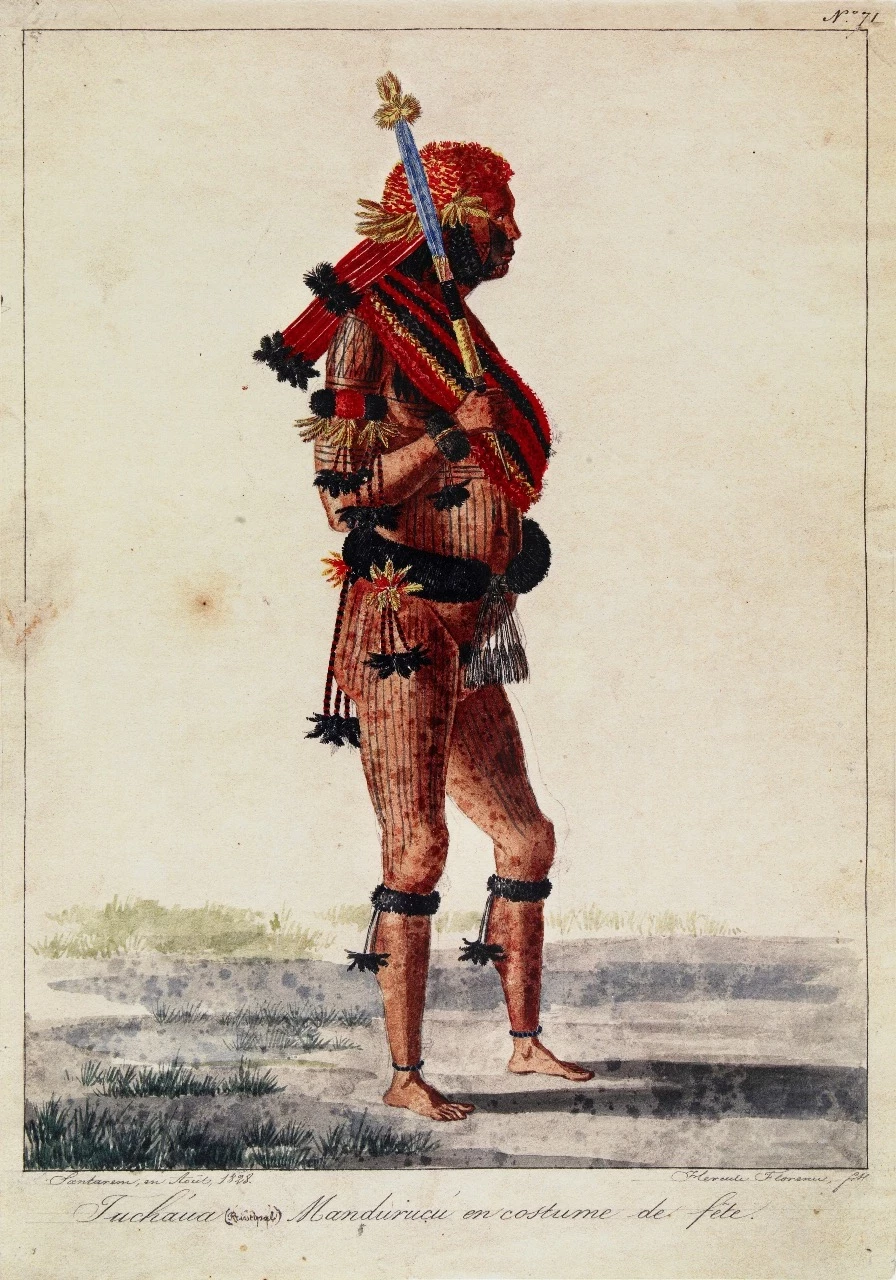
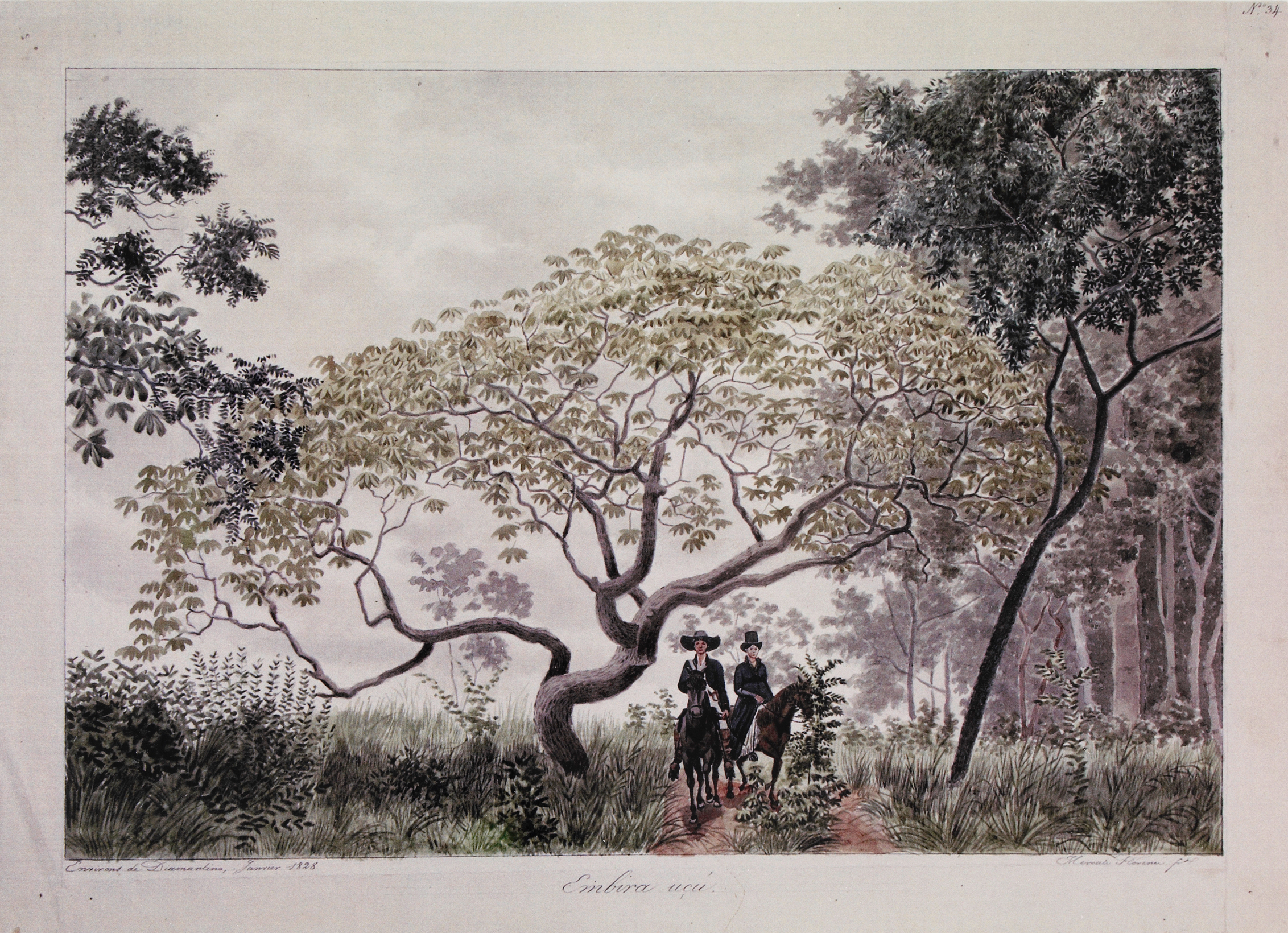
In 1826, he joined the Langsdorff Scientific Expedition, a monumental and hazardous journey from São Paulo deep into the continent toward the Amazon Basin. Financed by Tsar Alexander I of Russia, the expedition constituted one of the most ambitious scientific ventures of the nineteenth century. The immense archive it generated - drawings, specimens, journals, and Hercule’s own works - remains housed at the Peter the Great Museum of Natural History (The Kunstkamera) in Saint Petersburg, where it is still awaiting comprehensive modern study.
As one of the expedition’s artists, Hercule documented forests, rivers, wildlife, and remote communities with a lyrical accuracy that remains among the most vivid visual records of Brazil’s interior. But his curiosity extended beyond the visible. While naturalists of the era focused on mapping landscapes and cataloguing species by sight alone, Hercule became preoccupied with something they had largely ignored: sound. During the expedition he developed Zoophonia, a method for transcribing animal calls into written form - a pioneering attempt to notate the acoustic life of nature. His writings note that explorers were capturing what the eye could see, but not what the ear could hear. Hercule sought to change that imbalance. From this innovation emerged the intellectual foundations of bioacoustics, now a recognized scientific discipline within ethology dedicated to studying animal communication.
When the Langsdorff expedition concluded, Hercule settled in Campinas - not as a retired explorer, but as an experimenter consumed by a radical question: how could sound and image be reproduced mechanically? The answer led him to photography. Working in near isolation with scarce materials, Hercule developed a chemical process using silver nitrate and gold compounds, fixing images with ammonia.
On January 20, 1833, his experiments succeeded - and he named the result photography. Several prints from the 1830s endure today, making them the earliest known photographs produced in the Americas.
For more than a century, the significance of this achievement remained a historical whisper. It was only in 2022 that a systematic international scholarship finally established Hercule’s role. Scientists from the Getty Conservation Institute, the University of Évora, and the University of São Paulo convened in Évora, Portugal, at the initiative of the Hercule Florence Institute - founded by his great-great-grandson Antônio Florence, who has spent more than twenty-four years collecting and preserving his ancestor’s legacy. During the summit, three authenticated original Florence photographs underwent examination using the most advanced imaging technologies available, reinforcing the conclusions already emerging from archival research: Hercule made the first recorded use of the word photography; he pioneered the earliest known application of gold as a photosensitive agent; he produced the first photographic works on American soil; and he was the first to employ ammonia as a photographic fixer.
Hercule Florence spent the remainder of his life in Brazil, teaching, inventing, raising a large family, and shunning publicity. He died in 1879, never witnessing the full ascent of photography into a central art form and scientific tool of modern civilization. Decades later, São Paulo Museum of Art curator Pietro Maria Bardi would dub him the “Leonardo da Vinci of the Tropics,” acknowledging the breadth of his experimental genius. Even the natural world he so ardently recorded saluted him in return, when a newly identified species of frog was named Pseudopaludicola florencei.
From Monaco’s deeply artistic lineage to the depths of Brazil’s interior, Hercule Florence’s life forms a luminous cultural arc across continents - a reminder that some of the world’s most profound inventions are not born under spotlights, but quietly, in distant places, shaped by vision, persistence, and a singular imagination.
The views and opinions expressed herein are the views and opinions of the author and do not necessarily reflect those of The Monegasque™.
Disclosure: The Monegasque™ enhances the editing process with the help of carefully selected AI tools. These tools provide valuable support without taking over the editing process completely, ensuring that the final product is the result of human creativity and expertise augmented by the benefits of enhanced technology. This article is protected under the copyright of The Monegasque™. Unauthorized reprinting, republishing, or rewriting of this content is strictly prohibited without explicit permission from The Monegasque™. Quotations from this material are permissible provided that a direct link to the full article on The Monegasque™ is included.