Nature As Is
How The Imperfections Of The Natural World Inspire Artists.

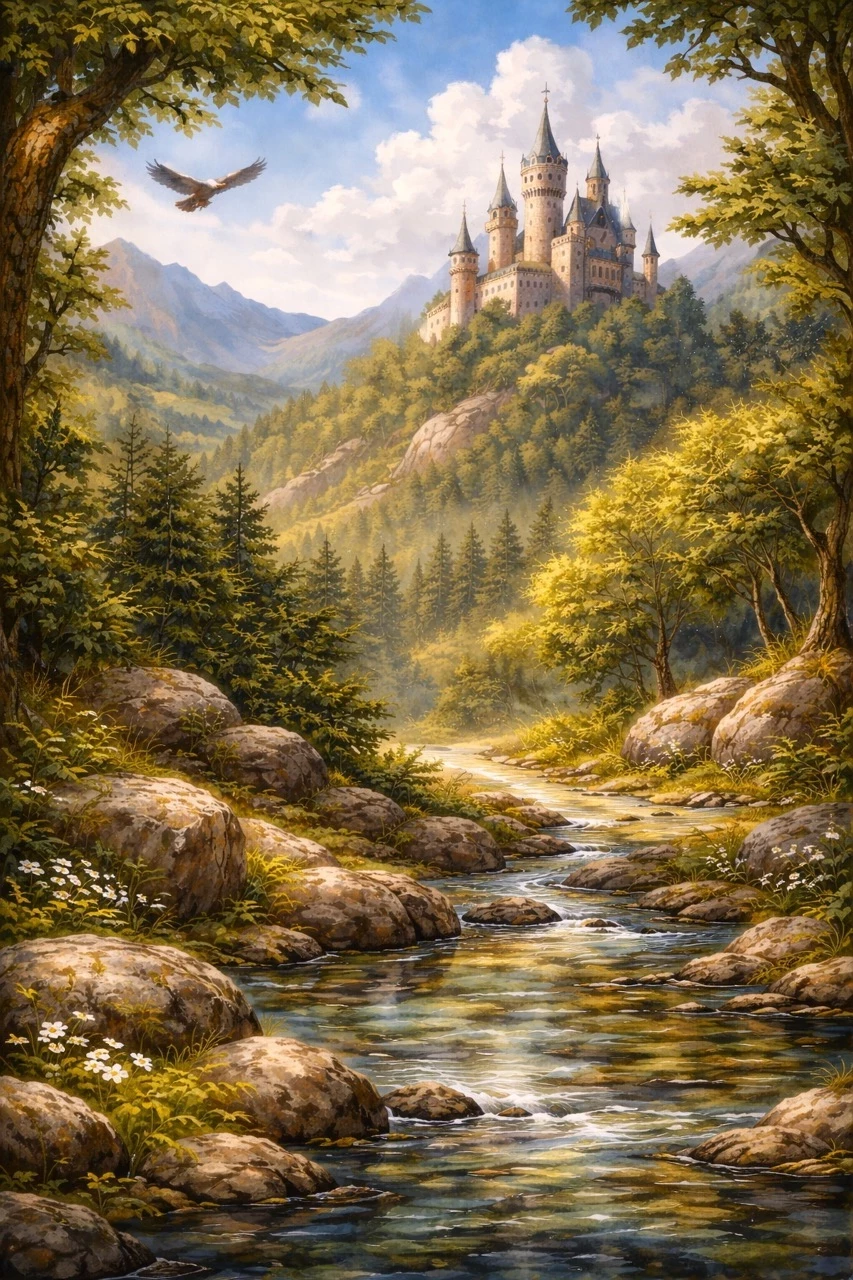
NATURE is the most enchanting creation of the Universe. It reveals itself through dazzling, colorful flowers, sun-drenched fruits, extraordinary animals, majestic mountains, deep blue rivers and seas, and the infinite celestial sphere above us.
For centuries, nature has been the primary source of inspiration for painters, artists, and poets alike. Their works have reflected its shapes, its colors, its visible reality as well as its spiritual and symbolic dimensions, often intertwined with imagination and environmental awareness.
During the Middle Ages, artists such as Caravaggio developed a profound connection with the natural world. Still life compositions - featuring flowers, fruits, and animals - were painted with extraordinary precision, capturing every detail with almost photographic accuracy. These works, often executed on wood using earth-based pigments, sought to reproduce nature as faithfully as possible, celebrating its authenticity and richness.
In the early 1900s, artists like Cézanne, Monet, and Van Gogh began painting en plein air, stepping outside the studio to immerse themselves directly in the landscape. Their goal was no longer mere representation, but the capture of light, emotion, and movement. Nature became a living presence on canvas, infused with sound, atmosphere, and sensation. This artistic evolution eventually led to abstraction, where nature was no longer depicted literally, but translated into form, rhythm, and color.
Over the centuries, however, the natural world itself did undergo dramatic transformations. Fruits, plants, flowers, and nearly all natural resources have been altered, reshaped, and modified. As nature evolved - often under human intervention - so too did the way artists portrayed it. Contemporary art increasingly reflects environmental fragility, loss of habitat, and the growing vulnerability of our planet. The reality of a changing world is now impossible to ignore.
This raises an unsettling question: where have the unique, expressive fruits of classical still life paintings gone? Today, many fruits appear synthetically identical, standardized in shape and color, eerily reminiscent of the green apple in René Magritte’s painting. Even the visual splendor of wild, fragrant lavender fields has largely disappeared, replaced by stronger hybrid lavandin, where each stem looks indistinguishable from the next.
As human intervention seeks perfection - smoother surfaces, brighter colors, uniform appearances - authenticity quietly fades. When nature is engineered to look flawless, it risks losing the irregularities and imperfections that once inspired artists. Creativity has always thrived on unpredictability, diversity, and the subtle poetry of what is imperfect and alive. As natural forms become increasingly standardized, artistic inspiration itself may lose depth, memory, and meaning.
In this sense, the loss is not only biological, but also cultural. It reflects a growing distance from the raw beauty that once ignited imagination and emotion. Representing nature today as a true biological reality has become increasingly difficult. Environmental art therefore emerges not only as a form of expression, but as an act of resistance - an effort to reclaim authenticity and to question artificial perfection.
For this reason, the long-awaited “Monaco Biennale 2027” will dedicate a special place to environmental art. Through the eyes and visions of contemporary artists, visitors will be invited to look through a kaleidoscope of perspectives, to reimagine new environmental worlds, and to reconnect with the fragile, imperfect, and vital essence of nature itself.
The views and opinions expressed herein are the views and opinions of the author and do not necessarily reflect those of The Monegasque™.
Disclosure: The Monegasque™ enhances the editing process with the help of carefully selected AI tools. These tools provide valuable support without taking over the editing process completely, ensuring that the final product is the result of human creativity and expertise augmented by the benefits of enhanced technology. This article is protected under the copyright of The Monegasque™. Unauthorized reprinting, republishing, or rewriting of this content is strictly prohibited without explicit permission from The Monegasque™. Quotations from this material are permissible provided that a direct link to the full article on The Monegasque™ is included.