Inside Out
Before The Steel Is Cut, Relationships Are Forged.
SHIPYARDS ARE USUALLY judged by what leaves them: size, design features, and innovations. At Oceanco, the Dutch builder behind some of the world’s most ambitious yachts, those measures matter but they are not the whole story. The more revealing account begins long before a yacht is launched, in the less visible ways of how people work together when no audience is present.
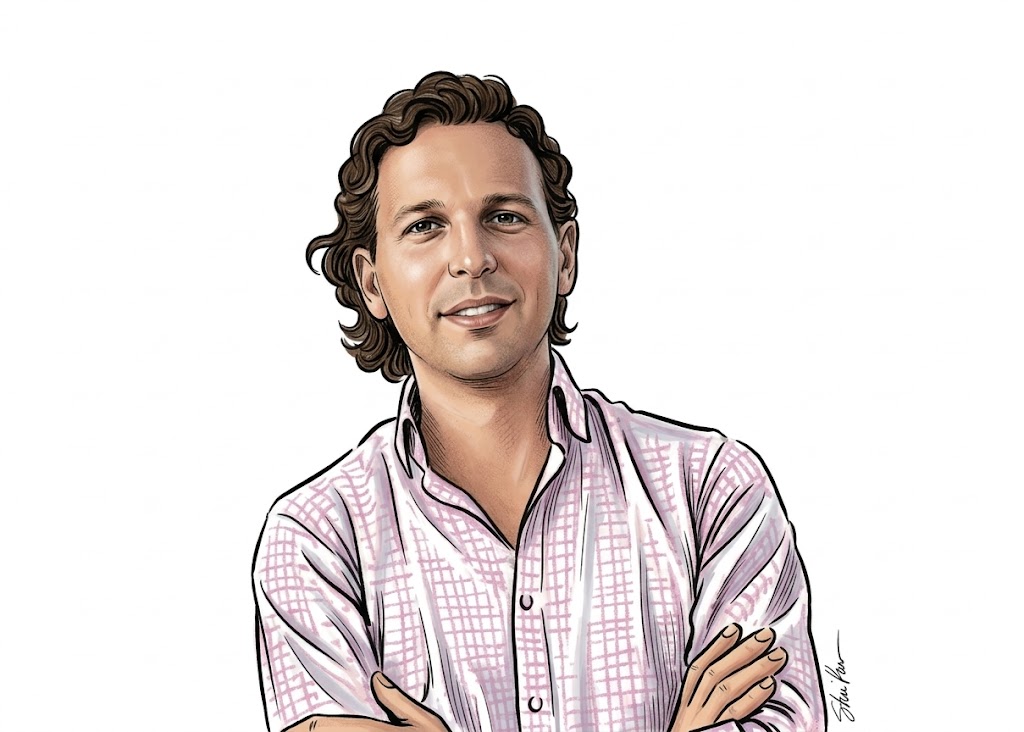
I have spent nearly two decades inside Oceanco. When asked what distinguishes the company, I do not begin with yachts or even with design. I begin with people. I joined during a period when the shipyard’s ambitions were unapologetically product-driven. Lifestyle and engineering boundaries were there to be pushed. Over time, that focus expanded. Project management was formalized, transparency increased, facilities evolved. Yet the most consequential shift was harder to quantify: a deliberate focus on culture.
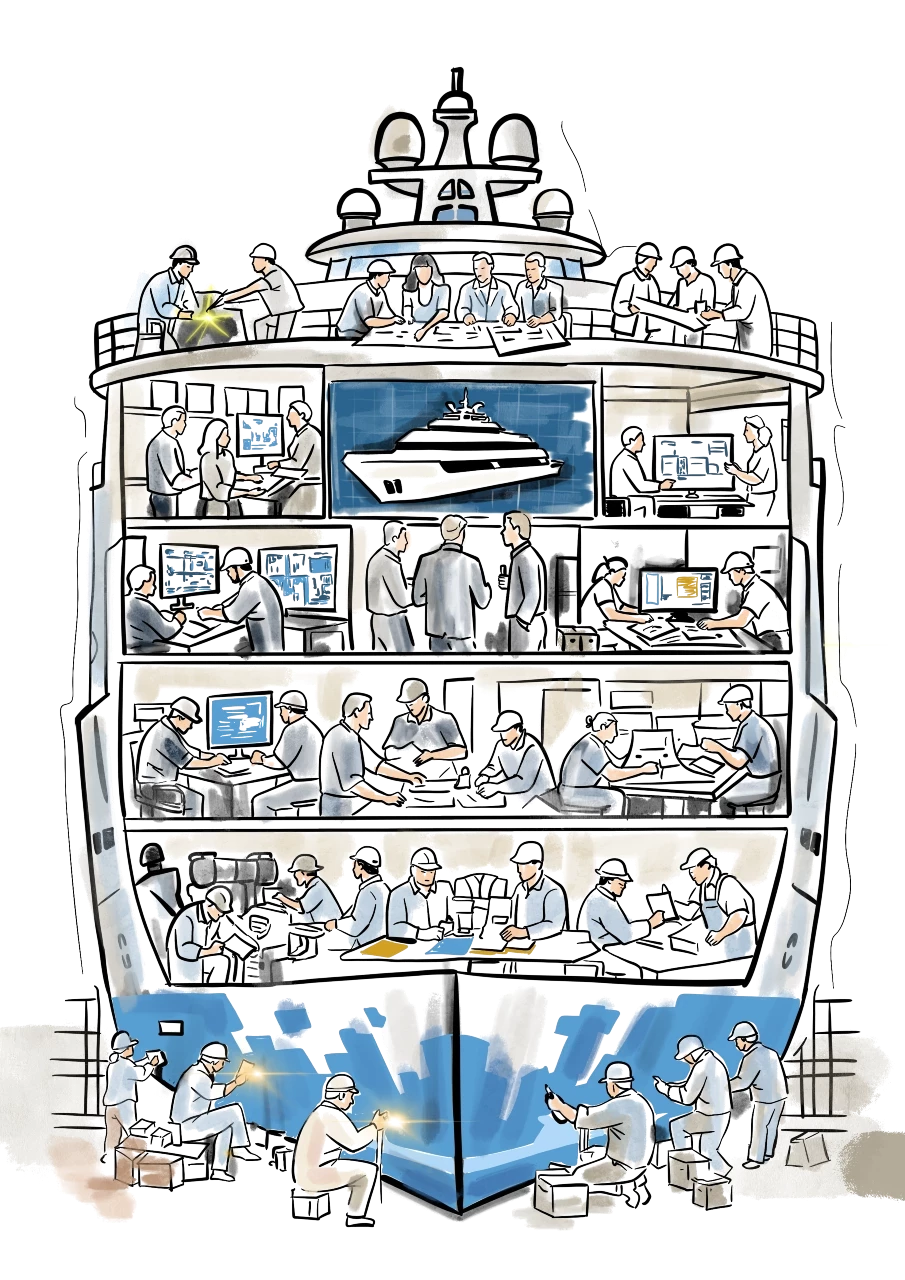
Leadership, as I experience it, is notably untheatrical. Expertise carries more weight than title. Meetings are structured around proximity to the work itself. Decisions tend to migrate toward those who know the most, not those who speak the loudest. This runs counter to standard assumptions about complexity. The instinct, when managing projects of extraordinary scale, is to tighten control. We do something more precarious: we distribute responsibility and rely on trust as a stabilizing force.
Trust, here, is not a soft value. Before steel is cut, relationships are forged. Suppliers are referred to internally and externally as “co-makers,” a term that signals collaboration rather than leverage. Long-term partnerships are preferred to transactional efficiency; transparency is valued over polish. Mistakes aren’t hidden. They are shared. That openness encourages accountability without fear, learning without defensiveness. Many supplier relationships span decades, and safety, always non-negotiable in an environment of machinery, is woven into daily routines rather than treated as a compliance afterthought.
Inside the company, we are often described through metaphors rather than org charts. One is a community of independent actors bound by shared purpose rather than formal authority. Another is the orchestra. In this telling, Oceanco is the conductor, not the soloist. The conductor does not instruct the cellist how to play; they create the conditions for the music to emerge.
People are encouraged to contribute insight, initiative and judgment, rather than simply execute a narrowly defined task. Value, in this view, resides in people aligning around a common endeavor. Recognition is also shared. On Leviathan, a glass wall bears the names of more than three thousand Contributors. No yacht, regardless of scale or acclaim, is the product of one mind.
Innovation, too, is treated as a collective responsibility. Freedom alone is not enough; ideas require support to move. I often speak of the need for an “innovation gearbox” - a way to channel ideas into momentum, ensuring that insight accelerates rather than stalls.
What strikes me is how little of this is announced. Culture appears in small, repeatable acts: how meetings are run, how pressure is absorbed, how disagreement is handled. An implicit question hovers over daily work: if someone could see how we operate today, would it match what we say about ourselves?
In an industry where image often eclipses reality, that alignment is necessary. Belonging is sustained by meaning rather than mandate. Continuity has helped. The company has long been owned by people who care deeply about yachts, a fact that has preserved coherence through periods of growth and change. Our ambition is not merely to build bigger or more advanced vessels. It is to gather the right people, in a community rather than a hierarchy, and to keep learning together.
We are still learning. And we should be.
The yachts are what we send into the world. The culture behind them - the trust, the people, the discipline of collaboration - has largely remained out of view. It may be the shipyard’s most carefully built structure of all.
The views and opinions expressed herein are the views and opinions of the author and do not necessarily reflect those of The Monegasque™.
Disclosure: The Monegasque™ enhances the editing process with the help of carefully selected AI tools. These tools provide valuable support without taking over the editing process completely, ensuring that the final product is the result of human creativity and expertise augmented by the benefits of enhanced technology. This article is protected under the copyright of The Monegasque™. Unauthorized reprinting, republishing, or rewriting of this content is strictly prohibited without explicit permission from The Monegasque™. Quotations from this material are permissible provided that a direct link to the full article on The Monegasque™ is included.