Finding The Apex
F1 2026 And The Pursuit Of Entertainment.

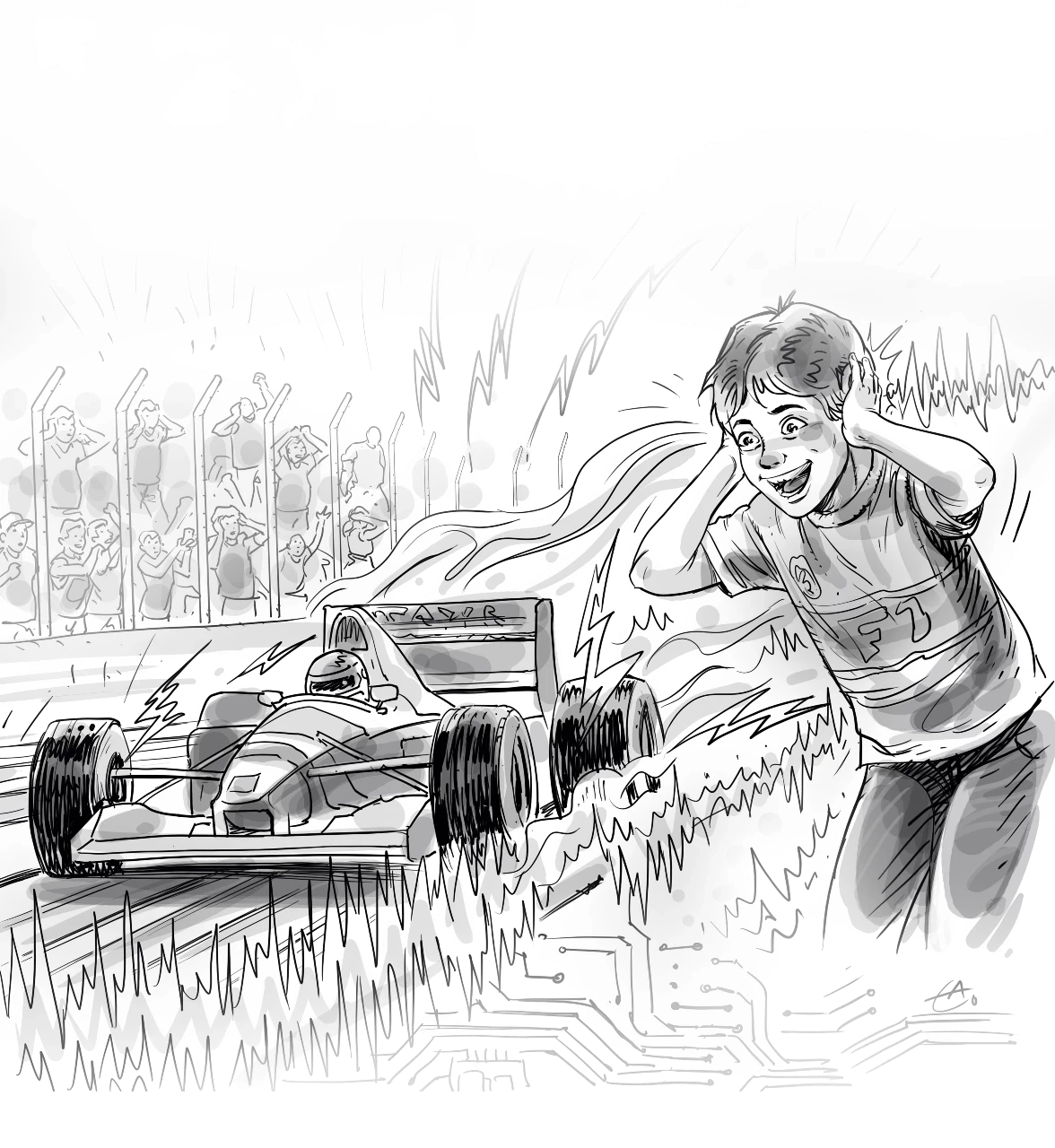
F1 HAS ALWAYS BEEN the pinnacle of driving, racing, and technology. Cars were lightweight, powerful, nimble, with a huge grip - it felt as if you had a direct connection between your body and the track.
I remember vividly, as a young kid in Brazil in the late Eighties and early Nineties, having goosebumps when I heard that symphony of engines screaming around Interlagos. With time, regulations became stricter, normally for good reasons like safety, cost containment and improvement of grey areas being exploited by the teams. Eventually that brought an end to the huge variety of engine configurations like the mix of V12s, V10s and V8s from the Nineties to only 3.0L V10s in the early 2000s. This was followed by another reduction to 2.4L V8s from 2006 until 2013. From 2009, a hybrid system was introduced, but it was still fairly simple and didn’t add much power and weight to the cars.
Since the start of the V6 hybrid era in 2014, F1 racing has become more about energy management. There’s always been a factor of how much fuel/energy you could use per race, per lap or more recently per second, but with hybrid cars and very strict fuel and battery limits, the emphasis on efficiency has largely replaced the pure racing aggression that used to characterize the sport. Also, as the complexity increased, so has the weight of the cars, increasing from 600kg in 2008 to 798kg in 2025! Low weight and high power have always been one of the key factors making F1 cars feel so special.
In this era, there have been many occasions when drivers and teams used their hybrid power to great effect during a race, creating overtaking opportunities, defending, building or closing gaps or even just turning everything down, once the race settled, to improve reliability. Max Verstappen has been a master of using his energy cleverly to get close to the car in front to attack or build a gap to the cars behind and defend.
Even then, one thing has been stagnant in F1 for a long time: overtaking. It’s very hard to overtake in cars that rely heavily on their wings to generate grip. This is because the car in front disrupts the airflow over and under the car behind, making it very hard to follow closely, unless the car behind has a huge tire advantage. Another effect is that the longer you follow another car, the more your tires degrade, which doubles the difficulty of overtaking. The Drag Reduction System, or DRS, was created to help overtaking in 2011, with the purpose of increasing the top speed of the car behind in certain conditions. This has helped somewhat, but the DRS could only be used in one or two zones of the racetrack and it was a very difficult balancing game by the FIA to make sure that those DRS Zones didn’t make overtaking too easy or impossible. A lot of the time, unfortunately, they didn’t get it right.
That was all just to say that lots of external factors have arguably been added to racing, making it less pure and more artificial, for the purpose of entertainment.
In the spirit of making the cars lighter and cutting some complexity from the powertrains, the 2026 regulations arrived with enormous controversy. Most people were focused on the fact that the cars would be a lot slower than the previous generation, but almost no one could predict the real effect in racing and driving until we saw the pre-season testing and first GP.
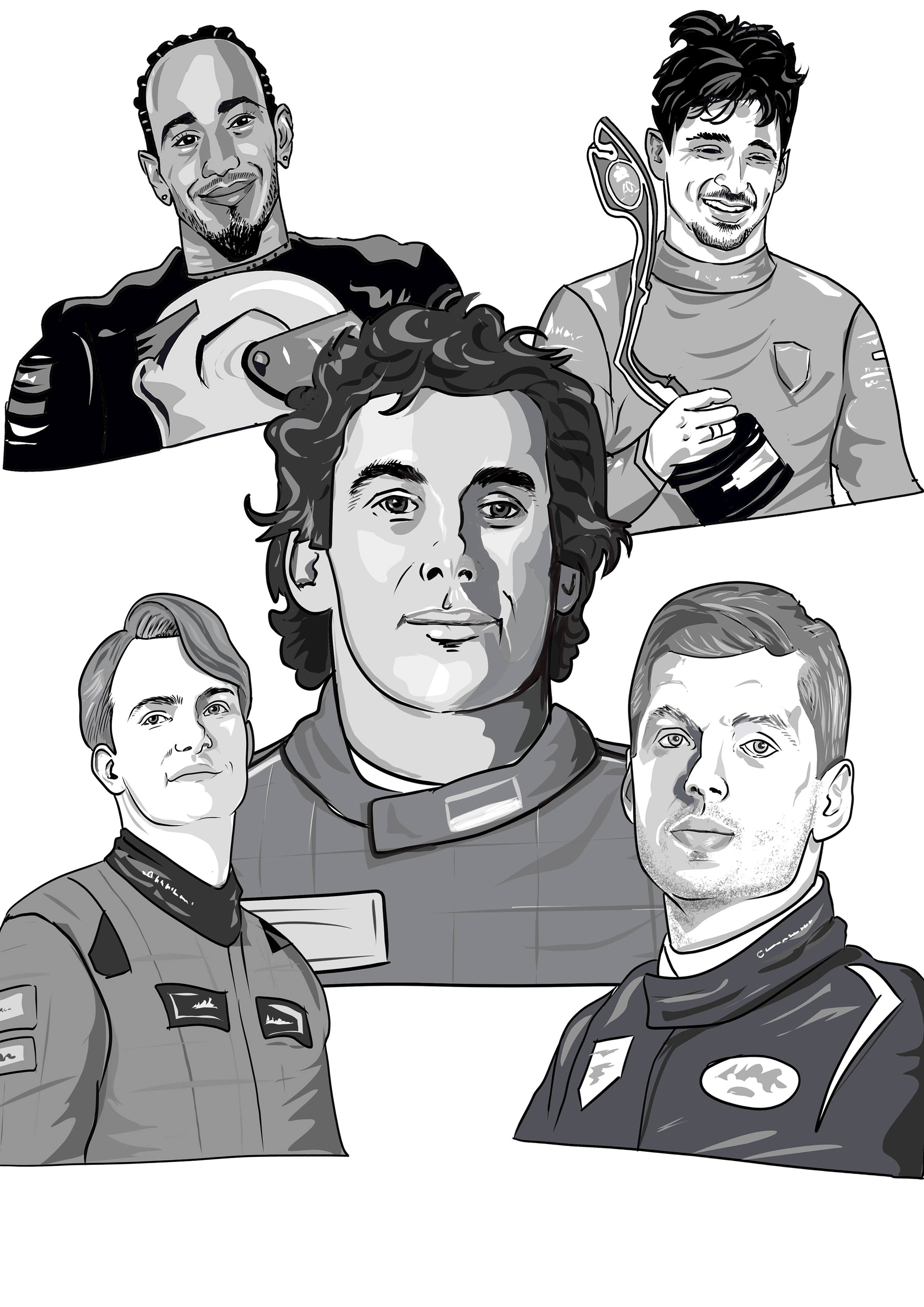
One of the changes was removing one of the two components that charges the battery from the hybrid system, which slightly reduced total system efficiency. In addition, the electric power portion of the total increased threefold, whereas the maximum battery charging capacity only doubled, and the battery size stayed the same. Now, power split between the Internal Combustion Engine (ICE) and the electric motor has gone from 80% ICE, 20% Electric to almost 50/50. This puts an unprecedented emphasis on teams figuring out the most efficient way to deploy and recharge the electric power, which is all done by software and simulation and thus increases the importance of the team and engineering over actual pure driver skills.
The immediate effect is that, in many moments during a given lap (even a qualifying lap) the cars must recharge their batteries when the cars are on a full throttle portion of the track. Bizarrely, the speeds drop massively as the car goes from making around 950hp at full power to around only 200hp (still at full throttle) in worst case scenarios. We’ve seen cars going from 320kph down to 260kph from the middle to the end of a straight when drivers are still at full throttle. The driver behind and spectators can see the moment the battery charging starts as the lights behind the cars start flashing to warn of a possible abrupt speed reduction.
While this causes the races to be amusing - because there’s a lot of action where there normally wouldn’t be - the driver’s skill to create an opportunity and perform a real overtake has been replaced by an overtake that’s been fabricated by having an enormous difference in power and speed. And most of this advantage has been created by the engineers to increase efficiency. Even during qualifying, when previous generation cars used to feel amazing with low fuel, unrestricted electric power deployment and new tires, current generation cars do not start their fling laps at full throttle to save battery energy for the rest of the lap.
The reality is that the car and team have been at more than 70% of the overall performance of a driver in normal conditions for a long time. But when it comes to racing between cars that are performing at a similar level, there has never been as much influence from the software/engineering as now. Even in the Eighties with the big turbos, when the driver could just increase the boost and gain huge power (at the expense of fuel consumption and reliability) during a race to overtake or defend, the difference wasn’t as big as it is now.
A lot of drivers say the best era of F1 was 2006-2008, when cars used to feel surgeon’s scalpel sharp around corners, were still barely small enough to drive around Monaco, sounded great and there were no artificial racing aids. Speaking of Monaco, up until 2014 when V6 Hybrid powertrains were introduced, anyone anywhere near town absolutely knew F1 was on track just by the amazing sounds reverberating on the mountains. Of course, that completely misses the issue that it was still very hard to follow closely and race/overtake, so a lot of races were very boring. But surely there must be a middle ground where cars can still be efficient by being lightweight, smaller, less complex, and using proportionally more mechanical grip to generate better racing that’s not just for entertainment? I think I speak for lots of racing fans who would love to see that, even if there’s still a simple hybrid system and synthetic fuel there to keep things a little bit greener.
The views and opinions expressed herein are the views and opinions of the author and do not necessarily reflect those of The Monegasque™.
Disclosure: The Monegasque™ enhances the editing process with the help of carefully selected AI tools. These tools provide valuable support without taking over the editing process completely, ensuring that the final product is the result of human creativity and expertise augmented by the benefits of enhanced technology. This article is protected under the copyright of The Monegasque™. Unauthorized reprinting, republishing, or rewriting of this content is strictly prohibited without explicit permission from The Monegasque™. Quotations from this material are permissible provided that a direct link to the full article on The Monegasque™ is included.