Born With A Silver Spoon
... And Antimicrobial Power.

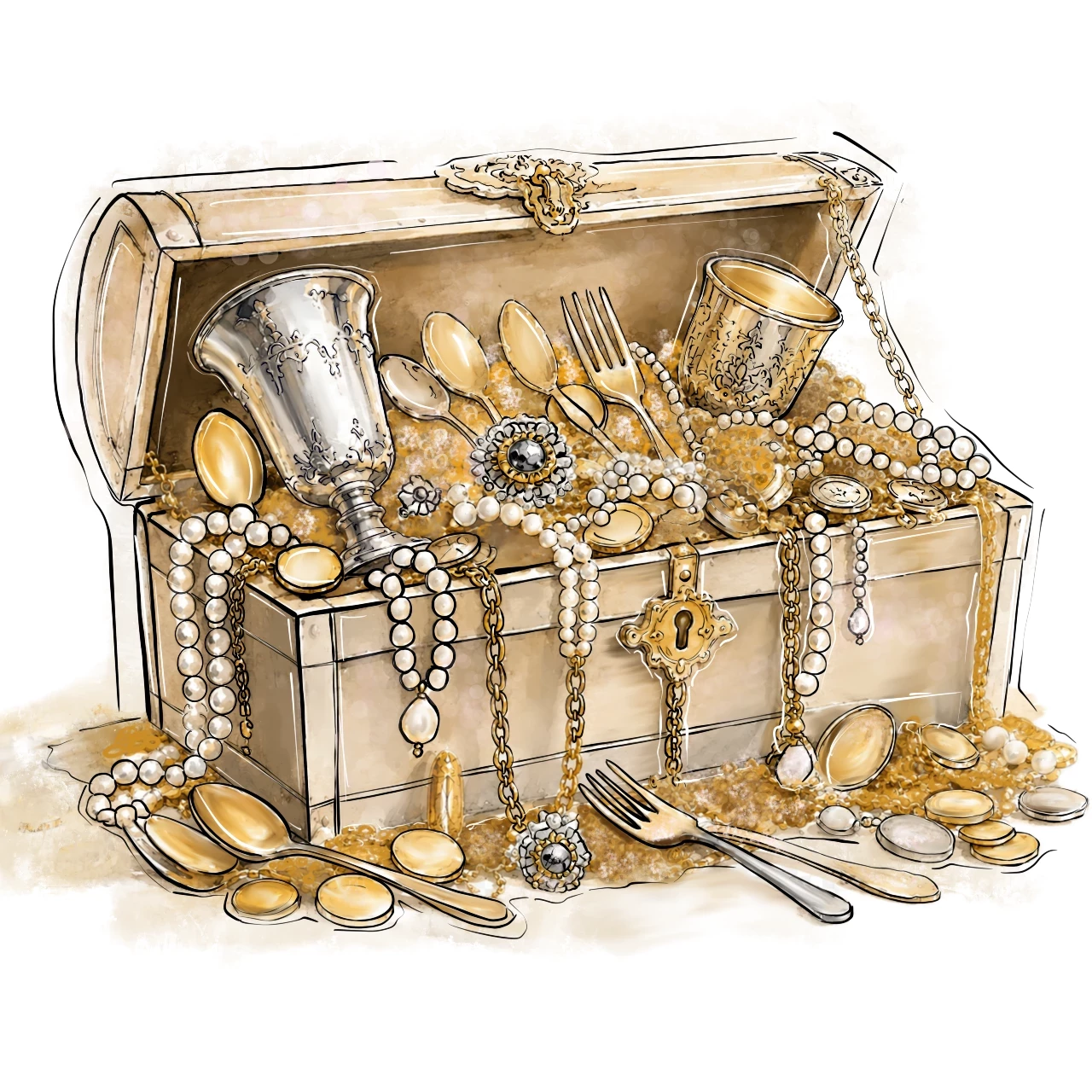
THE SILVER SPOON. The timeless phrase instantly conjures images of effortless privilege, where even the most ordinary moments shimmer with inherited luxury. Yet it hints at something deeper: a world where precious metals like silver, gold, copper, and their alloys didn't just signal status but quietly protected and enhanced life itself.
Long before modern medicine, these noble elements stood as natural guardians of health and vitality. In our plastic-filled age, rediscovering their gifts feels less like nostalgia and more like a wise return to something ancient, powerful, and profoundly relevant.
Silver has been cherished for its remarkable antimicrobial powers for at some six thousand years. The Egyptians, Greeks, and Romans stored water in silver vessels to keep it pure and fresh. Herodotus described Persian kings carrying boiled water in silver flasks to ward off illness. Hippocrates praised silver for healing wounds and fighting infection. On ancient battlefields and in medieval hospitals, silver leaf, wires, and nitrate were used to treat ailments and prevent festering.
Before antibiotics arrived, silver was the go-to defender; its ions quietly disrupting bacterial cell walls, metabolism, and a broad range of pathogens.
Wealthy families favored silver cutlery, plates, and goblets not only for their beauty but because the metal naturally resisted bacteria, keeping food fresher and meals safer. Every bite and sip came with a subtle shield of protection that stainless steel or plastic could never offer. During plagues, the affluent gave children silver spoons to suck on for safeguarding health, adding a rich layer of meaning to that famous expression.
Copper, often called the metal of life, boasts an equally extraordinary legacy. Early humans shaped it into tools nearly 11,000 years ago. Egyptian healers documented its use for wounds and eye troubles as far back as 3000 BCE. In Indian Ayurvedic tradition, storing water overnight in copper vessels known as tamra jal purifies it, aids digestion, boosts immunity, and restores balance. Copper's ions swiftly eliminate bacteria and viruses on contact.
Throughout history, copper powered bronze tools and art, adorned royalty, and protected health in ways we are only now fully appreciating again. Modern understanding confirms copper surfaces can dramatically reduce infections, proving what our ancestors sensed instinctively.
Then there is bronze, the legendary alloy of copper and tin that defined the Bronze Age and propelled human civilization forward. Emerging as early as the 5th millennium BCE, bronze represented a leap in technology—stronger, more durable, and easier to cast than pure copper, enabling superior tools, weapons, sculptures, and ritual objects that fueled trade across vast distances. Its warm, golden-brown patina develops a protective layer over time, granting remarkable corrosion resistance that has preserved artifacts for thousands of years.
Bronze carries forward copper's healing legacy while adding its own resilient character. Like copper, its surfaces naturally inhibit bacteria and viruses through the release of ions, making bronze vessels historically valued for storing and purifying water, supporting digestion, and promoting overall balance in traditional practices. Some traditions, including Ayurvedic influences, appreciate bronze (known as Kanchu) for imparting subtle vitality when used for cookware or drinking vessels. Bronze jewelry has long been worn to ease symptoms of arthritis and rheumatism, thanks to trace copper absorption and mild anti-inflammatory effects. In ancient Chinese medicine, early acupuncture needles were crafted from bronze for its ideal stiffness and resonant quality. Even today, bronze singing bowls produce deep, vibrational tones used in sound healing to foster relaxation, emotional balance, and inner harmony.
Which brings us to gold, the radiant king of metals. Over five thousand years ago, Egyptians consumed gold elixirs believing they purified body and mind, enhanced beauty, and promoted longevity. In ancient China, gold addressed skin conditions, fevers, and detoxification. In Ayurveda, carefully prepared gold (Swarna Bhasma) has long been revered as a rejuvenator that sharpens intellect, strengthens the heart and nervous system, supports immunity, and brings a subtle inner glow. It was seen as balancing the body's energies and conferring resilience. Even today, gold's unique properties inspire cutting-edge medical applications, from targeted therapies to anti-inflammatory treatments.
As it is sometimes said, gold is the money of kings and silver the money of gentlemen, yet their greatest wealth has always been how they serve human wellbeing.
All of these metals carried enduring virtues beyond offering good health. Gold symbolizes incorruptible value and royal splendor. Silver stands for purity and protection. Copper represents vital life force and practical strength. Bronze embodies resilient innovation and the harmonious fusion that advances humanity.
In today's world of synthetic materials that can harbor germs or leach unwanted chemicals, choosing silver cutlery, copper or bronze cookware and vessels, or gold adornments is both a luxury and a smart return to balance. These elements work gently and naturally: purifying water, reducing microbial risks at mealtimes, delivering trace benefits, and aligning with sustainable living. No prescriptions needed, just the elegant touch of time-tested metals that nurture body and spirit.
As ancient Ayurvedic wisdom beautifully captures it: Copper is the metal of life, silver the bringer of radiance and renewal, and bronze the bringer of enduring strength.
Together, they teach us that true vitality flows not just from pills, but from the simple, profound presence of nature's most precious elements in our everyday lives.
Rediscovering them isn't about looking backward. It's about moving forward with greater wisdom, elegance, and health, proving that the finest privileges are often the most timeless ones.
The views and opinions expressed herein are the views and opinions of the author and do not necessarily reflect those of The Monegasque™.
Disclosure: The Monegasque™ enhances the editing process with the help of carefully selected AI tools. These tools provide valuable support without taking over the editing process completely, ensuring that the final product is the result of human creativity and expertise augmented by the benefits of enhanced technology. This article is protected under the copyright of The Monegasque™. Unauthorized reprinting, republishing, or rewriting of this content is strictly prohibited without explicit permission from The Monegasque™. Quotations from this material are permissible provided that a direct link to the full article on The Monegasque™ is included.